
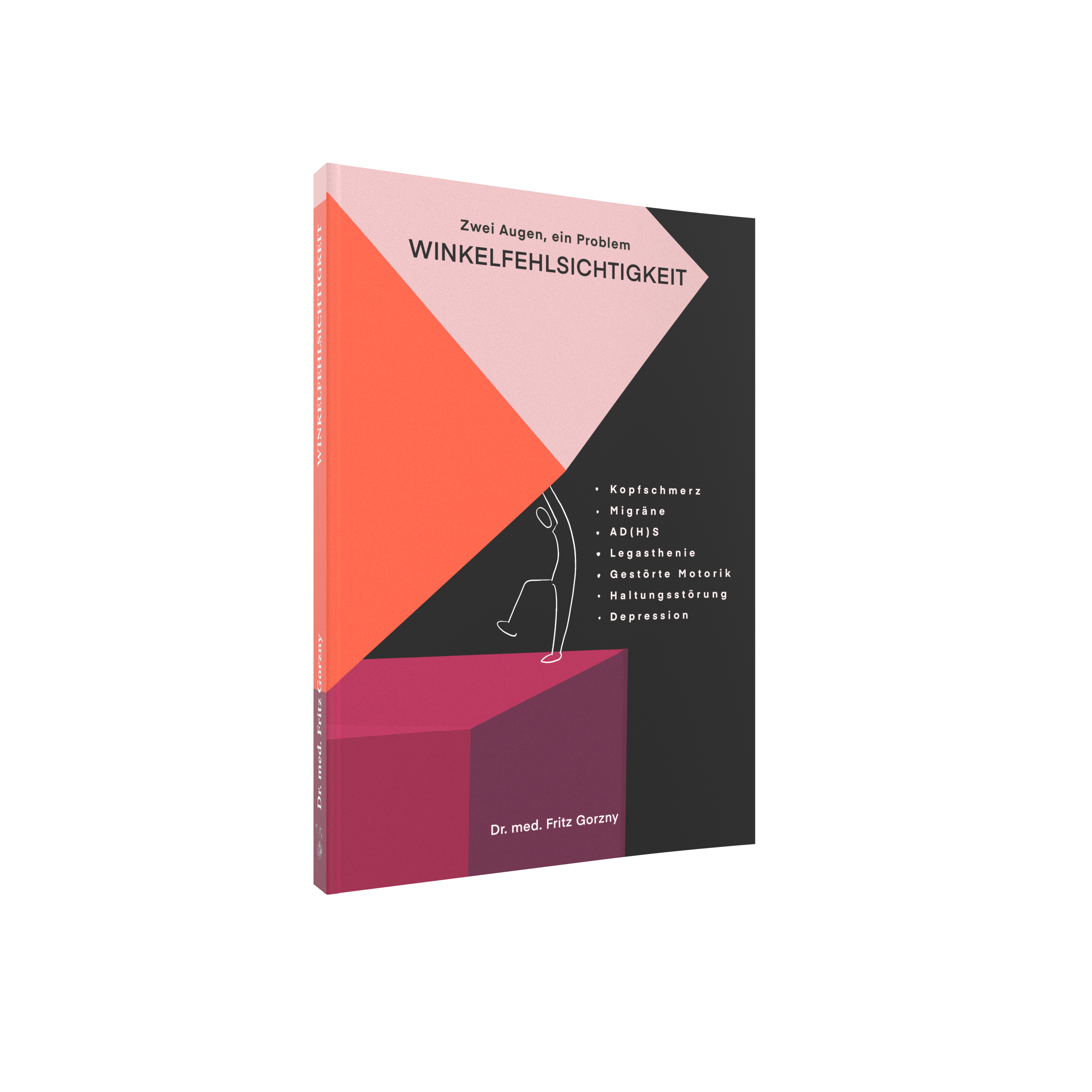
Winkelfehlsichtigkeit (Dr. Gorzny)
€26,00
This book does not intend to divide, but to end a dispute spanning over 70 years regarding anisometropia (heterophoria). Vision is a high-performance bodily function: two eyes deliver a synchronized, colorful, three-dimensional film, requiring enormous energy expenditure and the finest muscle coordination. When the eyes do not work together precisely, they must constantly readjust – this is called anisometropia.
While ophthalmologists measure heterophoria dissociatively (separation of both images), optician Hans-Joachim Haase developed associative measurement in the 1950s with the Polatest device – the so-called MKH method, in which central vision is separated, but the periphery is maintained. It is successfully applied by opticians, but rejected by ophthalmologists – which led to an ongoing professional and political conflict.
My own experiences with over a thousand patients show that MKH measurements lead to significantly better results – both in the fitting of prism glasses and in surgical corrections. Strabismus (misaligned vision) affects many physical and psychological functions: from postural problems and ADHD to dyslexia. All of this can be alleviated or even cured by correction.
Nevertheless, most ophthalmologists refuse MKH, although the procedure has long been available. As an ophthalmologist who works closely with opticians, I am advocating for an end to the blockade – for the benefit of patients. This book shows through case studies and analyses that MKH is a practical and necessary approach – and that health insurance companies should cover the costs for it.
Asthenopia: A Disorder of Binocular Vision with Far-Reaching Consequences, Dr. med. Fritz Gorzny, Paperback, 406 pages, €26



Nicola Seinsch -
Dr. med. Fritz Gorzny devotes his book to a complex and a subject that has been debated controversially for decades: binocular vision and the amblyopia.
Particularly interesting is the historical account of the MKH method, developed by Hans Joachim Haase, as well as the related professional discussions between ophthalmologists and opticians. Gorzny connects this history with his long-standing experience from clinical practice and numerous observations of patients.
The book makes it clear how precisely both eyes must work together in order to achieve stable spatial vision. At the same time, it encourages a greater consideration of patients' complaints and individual visual experiences.
Another focus is on possible connections between binocular visual impairments and various complaints such as headaches, ADHD, reading and spelling difficulties, arithmetic difficulties, motor impairments, mental disorders, depression, and others. The book offers interesting ideas for discussion in this area.
Conclusion:
An engaging and personally-informed book that combines medical experience, the history of the MKH method, and the perspective of the patients. It is not only interesting for ophthalmologists and opticians, but for all doctors and therapists and for everyone who suffers from the above-mentioned conditions. Because everyone should be more actively concerned with binocular vision and its effects.
A valuable documentation of decades of professional discourse and a plea for paying more attention to binocular vision.